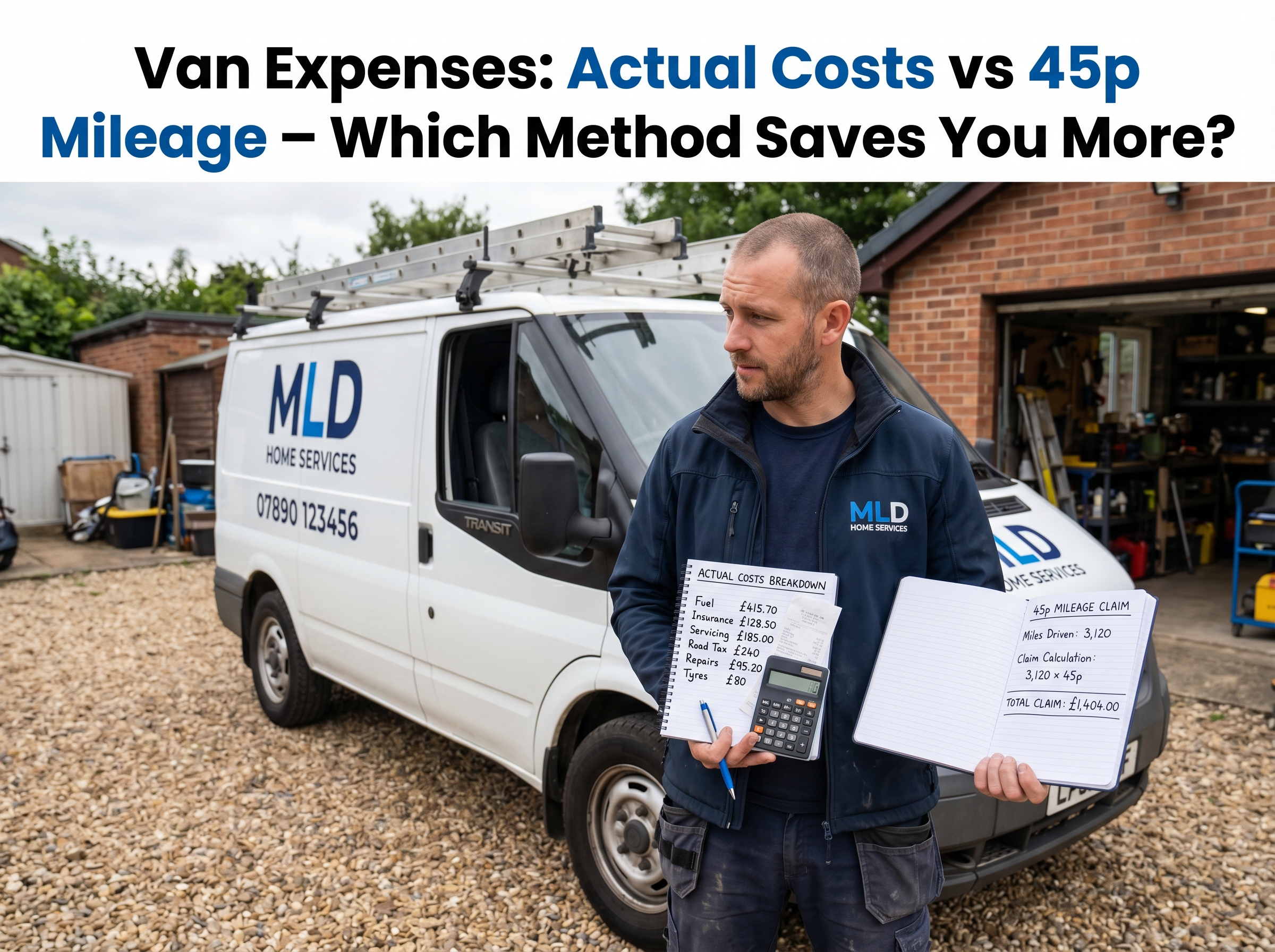
Van Expenses: Actual Costs vs 45p Mileage – Which Method Saves You More?
In the UK construction industry, your van is often one of the biggest overheads. When it comes to claiming tax relief, many subcontractors automatically choose the easy 45p per mile rate without realising they could be missing out on thousands of pounds in deductions.
As a sole trader or subcontractor, you have two main options for claiming van expenses:
- Simplified Mileage Allowance (45p / 25p per mile)
- Actual Costs method
Choosing the wrong method can cost you a significant amount of tax relief every year.
How the 45p Mileage Allowance Works
HMRC’s simplified mileage rates are:
- 45p per mile for the first 10,000 business miles in the tax year
- 25p per mile for every mile above 10,000
This flat rate is designed to cover fuel, insurance, servicing, repairs, MOT, road tax, and depreciation — you don’t need to keep receipts for these costs.
Advantages of the Mileage Method
- Very simple admin — you only need to record business mileage (date, journey purpose, start and end mileage).
- Predictable and easy to calculate.
- Often better for older, low-maintenance vans with low annual mileage.
Disadvantages of the Mileage Method
- The rate drops sharply after 10,000 miles.
- You cannot claim the purchase price of the van or any capital allowances.
- You cannot claim VAT back on fuel if you’re VAT registered.
The Actual Costs Method
With this method, you claim the business percentage of all real costs associated with running the van. Allowable expenses include:
- Fuel
- Insurance
- Road tax (VED)
- MOT, servicing and repairs
- Tyres and breakdown cover
- Interest on finance / HP agreements
- Cleaning
Crucially, if you buy a new or used van, you can usually claim capital allowances — often the full cost in the first year via the Annual Investment Allowance (AIA).
Real-World Comparison Example
Let’s take a typical subcontractor who drives 12,000 business miles per year in a £20,000 diesel van:
Scenario A: Mileage Method
- 10,000 miles × 45p = £4,500
- 2,000 miles × 25p = £500
- Total deduction: £5,000
Scenario B: Actual Costs Method
Typical annual running costs (example):
- Fuel: £2,300
- Insurance: £1,200
- Servicing, tyres & MOT: £600
- Road tax & breakdown cover: £320
- Finance interest: £800
- Subtotal running costs: £5,220
Plus Capital Allowance on the van purchase (potentially up to £20,000 in year one if using AIA).
In this case, the Actual Costs method already beats the mileage rate — and the capital allowance makes the difference even bigger.
Important Rules You Must Follow
- Consistency rule: Once you choose a method for a particular van, you must stick with it for as long as you use that vehicle in your business. You cannot switch annually.
- If you use the van for personal journeys, you must calculate the exact business percentage (e.g. 80% business / 20% private) and only claim that portion.
- Keep detailed records and receipts — HMRC expects proof.
Which Method Should You Choose?
Choose the Mileage Allowance if:
- You have an older, low-cost van
- Your annual business mileage is under 10,000 miles
- You want minimal paperwork
Choose Actual Costs if:
- You’ve recently bought or financed a new/expensive van
- Your annual mileage is high (especially over 10,000 miles)
- You have significant running or maintenance costs
- You want to claim capital allowances on the purchase price
Final Advice
Don’t guess — calculate both methods using your actual figures from the last 12 months. The difference can easily be £1,000–£5,000+ per year depending on your situation.
If you’re unsure which route is best for your van and business, or you need help setting up proper records, speak to a specialist construction accountant. Getting this decision right can put thousands of pounds back into your pocket where it belongs.