Tax & Expenses · 2026
The Tool Tax Trap: Are You Leaving £500+ in the Hardware Store?
Most CIS subcontractors hand hundreds of pounds straight back to HMRC every year — not through bad luck, but through a paperwork habit that takes about 30 seconds to fix.
Every time you leave a hardware store without logging that receipt, you are effectively donating money to HMRC that you were never legally required to pay. The tool tax trap is not a loophole — it is standard HMRC tax relief that most tradesmen simply never claim.
The Cost of Every Receipt You Throw Away
It seems trivial. A dusty receipt stuffed in a work jacket, a paper bag left in the van, a bank statement line you never bothered to annotate. But each one of those represents a real deduction you are entitled to — and choosing not to claim it is exactly the same as writing HMRC a cheque for the difference.
For a CIS subcontractor spending £2,500 a year on tools, consumables, and equipment — a conservative figure for most trades — the failure to claim those expenses correctly translates to over £500 in unnecessary tax at the standard 20% rate. For higher earners, the number is worse.
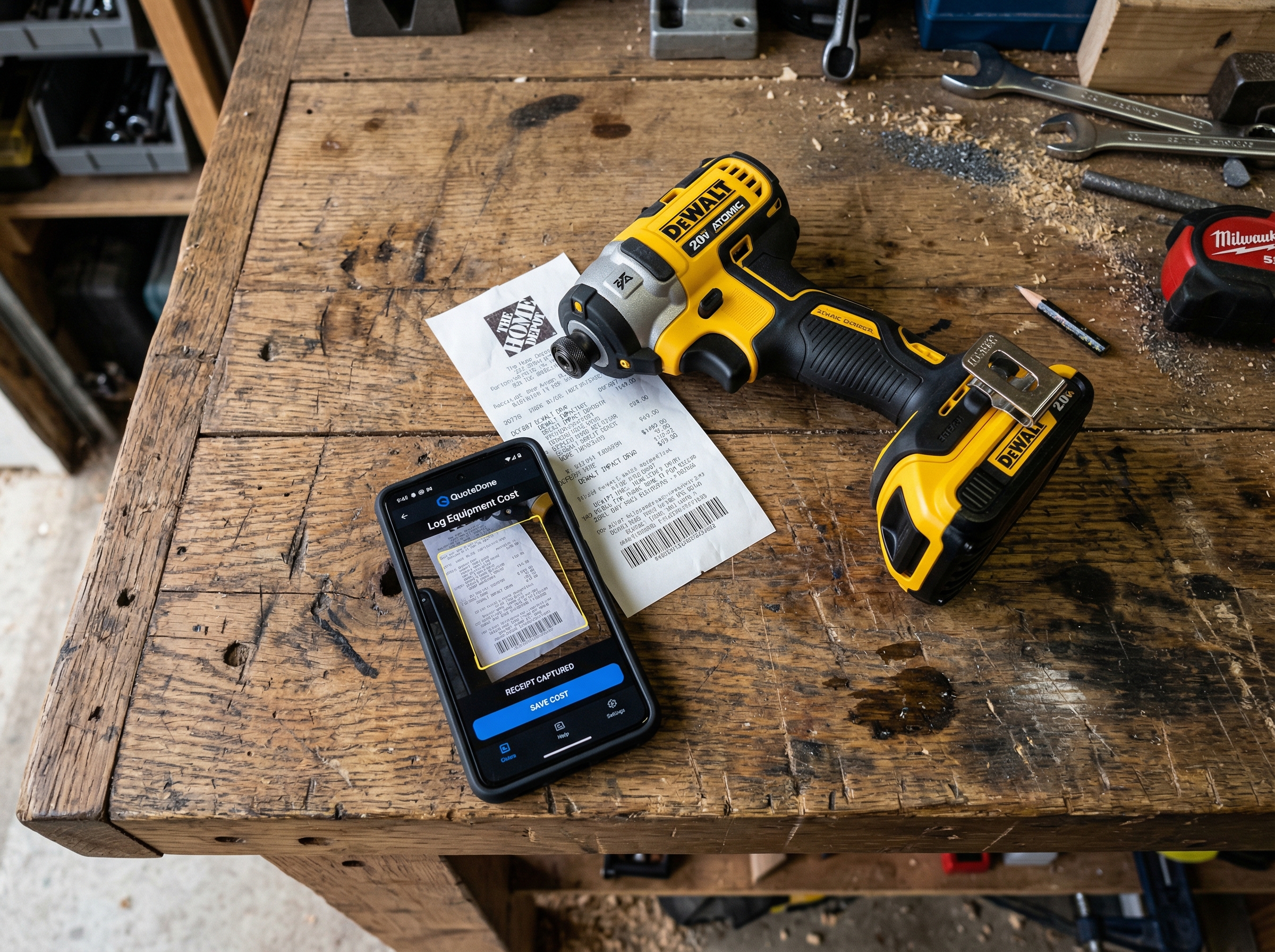
A carpenter buys a professional cordless drill-driver kit for £1,500. By claiming it through Annual Investment Allowance (AIA), the full cost is deducted from taxable income in the same tax year — no spreading over multiple years. At a 20% tax rate, that single purchase produces £300 in genuine tax savings. Left unclaimed: it costs £300 to buy a tool that should have cost £1,200.
You are not finding a loophole. You are claiming relief that Parliament specifically created for tradespeople. Not claiming it is the unusual choice.
CIS Tax Insights, 2026What You Can Actually Claim
HMRC's rules are broader than most subcontractors realise. The test is simple: was it purchased wholly and exclusively for business use? If yes, it is deductible. Here is what qualifies:
"Wholly and Exclusively" — What It Actually Means
HMRC requires that expenses be incurred "wholly and exclusively" for business purposes. For tools, this is straightforward: if it lives in the van and goes on site, it qualifies. If you buy a drill that also does weekend DIY at home, HMRC may challenge a full claim — keep business and personal purchases separate, on separate transactions.
The Practical Fix: A Checklist for Tool Claims
None of this requires an accountant on retainer. It requires a 30-second habit every time you make a purchase for the business.
-
Go Digital — Before the Receipt Fades Thermal receipts lose their print within weeks. The moment you walk out of any trade counter or hardware store, photograph the receipt. Log it to the correct project or category immediately. Do not wait.
-
Keep Business and Personal Separate Never mix site tools and home DIY materials on the same purchase. Pay business expenses from a dedicated account or card. The cleaner your records, the higher your defensible claim — and the shorter your HMRC conversation if they ever ask.
-
Log Repairs, Not Just Purchases A new blade set, a service on your compressor, a replacement battery — every repair and maintenance cost is a 100% deductible revenue expense. Most subcontractors claim tools but forget the running costs entirely.
-
Understand Annual Investment Allowance (AIA) For purchases over roughly £200 that will last more than two years, claim through AIA. This gives you the full deduction in the year of purchase — not spread across several years through capital allowances. The AIA limit is currently £1 million, so you will never hit the cap as a sole trader.
-
Don't Wait Until January If you are assembling your expenses list the week before your tax return is due, you are already losing money. Missing purchases, faded receipts, forgotten transactions — they all add up to a higher bill. Track as you go, year-round.
Look back at your last three months of bank and card statements right now. Any tool, consumable, or PPE purchase you have not yet logged is money sitting unclaimed. Five minutes of backwards reconciliation could be worth hundreds of pounds.
Why Most Subcontractors Still Don't Claim
It is not ignorance of the rules. Most tradespeople know, in principle, that tools are tax deductible. The failure is always operational: paper receipts disappear, mental notes evaporate, and by January the task feels insurmountable.
The solution is not more discipline — it is a system. When logging an expense costs less effort than losing it, behaviour changes automatically. That means a digital tool that lives where you already spend time: your phone.
QuoteDone was built specifically for this gap. It lets you photograph receipts instantly, categorise purchases against projects, and keeps a compliant digital paper trail year-round — so your accountant gets clean data, not a bin bag of paper.
Stop leaving money behind
Know Your Real Profit — Every Week.
Stop guessing at tax time. Start tracking tools, mileage, and expenses with QuoteDone and see exactly where your money goes.
Try QuoteDone Free →Professional quotes in minutes · Expense tracking built in
This article is for informational purposes only and does not constitute professional tax or financial advice. Always consult a qualified accountant for advice specific to your circumstances. Figures based on 2025/26 HMRC thresholds.