Tax Strategy · 2026/27
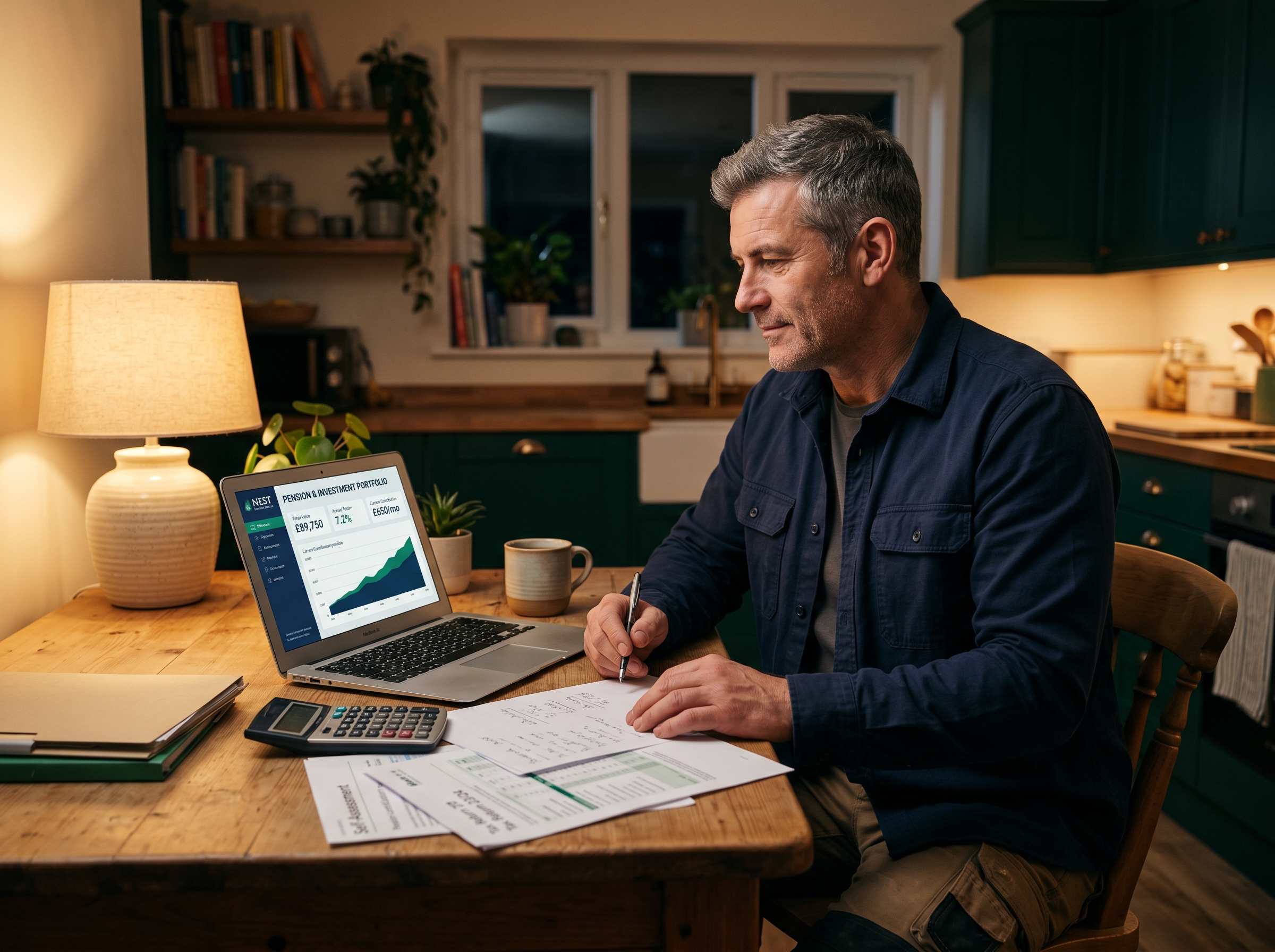
Many CIS subcontractors view their monthly 20% or 30% tax deduction as a permanent, fixed loss. Using a Self-Invested Personal Pension (SIPP) lets you legally reduce your Adjusted Net Income and pull a larger refund out of HMRC every year.
Most sole traders think about pensions purely as something for old age — a box to tick eventually, not now. But for a CIS subcontractor earning good money, a pension is something else entirely: an immediate, legal tool for reducing what you owe HMRC this year. By directing part of your earnings into a SIPP, you reduce your "Adjusted Net Income" — the figure HMRC actually taxes you on — and that can mean a noticeably larger refund at Self Assessment time.
The Problem: Crossing Into the 40% Band Without Noticing
Here's a question worth asking yourself honestly: do you know exactly how much of your income last year was taxed at 40%? Most subcontractors don't — because the higher-rate threshold creeps up on you gradually, contract by contract, without any obvious warning.
As day rates rise and workload increases, it's easy to drift past the basic-rate threshold into the 40% band without ever adjusting how your finances are structured. Once you're over that line, HMRC takes close to half of every additional pound you earn above it.
Even if your entire income sits comfortably within the 20% basic rate, ignoring a pension still means turning down free money. A SIPP is one of the few tools where the government effectively matches part of your own savings — money that's yours either way, but only grows if you claim it.
A SIPP lets you choose where your money sits. Either it stays with HMRC as tax you'll never see again, or you legally redirect part of it into your own investment account — where it keeps growing for you.
CIS Tax Insights · 2026How a SIPP Actually Boosts Your Money
Think of a SIPP contribution like this: for every £80 you put in, the government adds £20 on top — instantly, automatically, no waiting. That's basic-rate tax relief, and it applies to every UK taxpayer who contributes to a pension.
If part of your income falls in the 40% higher-rate band, there's a second layer. You can claim the extra 20% back through your Self Assessment return — meaning the same £80 contribution could end up costing you closer to £60 once your tax bill is adjusted, while still sitting in your pension as £100.
You transfer £800 from your business account into your SIPP. The government instantly adds £200 in basic-rate relief, bringing your pension pot to £1,000. If part of your income is taxed at 40%, you can then claim back a further £200 through your Self Assessment — meaning that £1,000 pension asset effectively cost you just £600 out of pocket.
What This Looks Like on a Real Income
Here's a realistic scenario for a specialist plant operator or experienced subcontractor earning £60,000 gross in a year. Without any pension contributions, a meaningful chunk of that income sits in the 40% band and is taxed accordingly.
| Personal cash paid into SIPP | £8,000 |
| HMRC basic-rate top-up (20%) added automatically | +£2,000 |
| Total pension pot created immediately | £10,000 |
| Additional higher-rate relief claimed via Self Assessment | +£2,000 tax reduction |
| Total benefit vs. paying the tax to HMRC instead | £4,000 |
£8,000 out of your pocket becomes a £10,000 pension pot on day one — and a further £2,000 comes off your tax bill at year end. That's £4,000 of value that would otherwise simply disappear into HMRC's general tax revenue.
That extra £2,000 in higher-rate relief only applies to the portion of your income taxed at 40%. If your entire income sits within the basic-rate band, you'll still get the automatic 20% top-up — but not the additional Self Assessment refund. The next section shows exactly what that looks like.
What If All Your Income Is Taxed at the Basic Rate?
Most CIS subcontractors earn somewhere in the £30,000–£40,000 range, comfortably within the basic 20% band. If that's you, the higher-rate examples above might feel like they don't apply to you — but the basic top-up still does, and it's worth having.
Contribute £800 to a SIPP, and the government adds £200 automatically — no Self Assessment claim needed, no extra paperwork beyond opening the account. That's a 25% return on your money before it's even been invested. There's no other place most people can get a guaranteed 25% uplift simply by moving money from one account to another.
The Rules You Need to Know Before You Start
A SIPP is genuinely powerful, but HMRC sets clear boundaries around how it works. Get these wrong and you could face an unexpected tax charge instead of a refund — so it's worth understanding them before you make a contribution.
-
The Annual Allowance Cap Tax relief is capped at 100% of your relevant UK earnings, or £60,000 per year — whichever is lower. Contribute more than this and you may face a tax charge that claws back the relief you received.
-
Your Money Is Locked Until Retirement Age SIPP funds exist for genuine retirement provision and are not accessible on demand. The current minimum access age is 55, rising to 57 from 2028. Do not treat a SIPP as an emergency fund or short-term cash reserve.
-
Relief Applies Only to Earned Income Pension tax relief is based on income that's subject to UK Income Tax — your self-employment profits, essentially. Rental income, dividends, or other unearned income do not count toward your relevant earnings for this purpose.
-
Unused Allowance Can Carry Forward Three Years If your income was higher in any of the previous three tax years and you didn't use your full £60,000 allowance in those years, you may be able to "carry forward" that unused allowance and contribute more than £60,000 this year with relief. This is especially useful after a strong year followed by a quieter one. Ask your accountant whether you have unused allowance available.
-
Lump Sum Allowance on Withdrawal The old Lifetime Allowance was abolished in 2024, but a new Lump Sum Allowance now limits how much you can take out of your pension as tax-free cash over your lifetime — currently £268,275. This only becomes relevant if your pension pot grows very large, but it's worth being aware of as your fund builds, particularly as you approach age 75.
SIPP or ISA? Where Your Money Should Go
A SIPP isn't always the right home for spare cash — it depends on what you actually need that money to do for you over the next few years.
- Part of your income falls in the 40% higher-rate band
- You want an instant 20–40% government top-up on your contribution
- You're investing for genuine long-term, tax-sheltered growth
- You won't need this money for business cash flow or personal spending before retirement age
- You're planning to buy a van, tools, or heavy plant in the next few years
- You want an emergency fund for slow months or verification issues
- You want tax-free growth but need the right to withdraw at any time
- You're early in your career and still building a basic cash buffer
Your Pre-April Action Plan
-
Work Out Your Year-to-Date Gross Income Add up your gross earnings across all contracts so far this tax year, before deductions. This tells you roughly how much of your income is sitting in the 40% band — and therefore how much a SIPP contribution could realistically save you in tax.
-
Open a SIPP With an FCA-Regulated Provider Don't leave this until the last week of the tax year — providers need time to process applications and contributions. Look for a platform that allows flexible, one-off lump-sum payments, since most subcontractors' income varies month to month.
-
Keep Every Contribution Confirmation Each deposit generates a confirmation showing the amount paid and the basic-rate top-up added. File these alongside your other tax records — without them, your accountant has no way to claim your higher-rate relief on your Self Assessment.
-
Tell Your Accountant Specifically About Your SIPP Contributions HMRC does not automatically apply higher-rate pension relief — your accountant has to enter your gross contribution figures into the correct section of your Self Assessment return. If they don't know about your SIPP, you won't get the extra relief you're entitled to.
Stop Leaving This Money on the Table
Not using a pension as part of your tax planning doesn't mean you're avoiding risk — it means you're choosing to leave money with HMRC that could legally be sitting in your own investment account, growing for your future. Over years of trading, that's a meaningful amount of lost relief and lost compound growth.
Take an afternoon this month to pull your numbers together, work out how much of your income is in the higher-rate band, and look into setting up a SIPP — even a modest, regular contribution adds up. It's your money. The only question is whether it ends up building your retirement, or simply funding HMRC's budget.
Frequently Asked Questions
How much can a CIS subcontractor contribute to a SIPP each year?
You can receive tax relief on contributions up to 100% of your relevant UK earnings, capped at £60,000 for the 2026/27 tax year. If your earnings are lower than £60,000, your relevant earnings figure is the limit — not the £60,000 allowance itself. Anyone can also contribute up to £3,600 gross even with no earnings at all, though this is less relevant for most working subcontractors.
Do I need to be a higher-rate taxpayer to benefit from a SIPP?
No. Every UK taxpayer who contributes to a pension receives the automatic 20% basic-rate top-up, regardless of their income level. The additional higher-rate relief claimed through Self Assessment only applies if part of your income falls in the 40% band — but the basic top-up alone is still valuable for anyone.
I had a much better year three years ago than I'm having now — can that help me?
Potentially, yes. The "carry forward" rule lets you use unused pension allowance from the previous three tax years, provided you were a member of a registered pension scheme during those years. If you earned well above £60,000 in a strong year but didn't contribute much to a pension at the time, you may be able to make a larger contribution now and still get full tax relief. This is worth raising with your accountant, especially if your income varies significantly from year to year.
Can I access my SIPP money if my business hits a cash flow problem?
No — and this is the key trade-off to understand before contributing. SIPP funds are locked until the minimum pension access age, currently 55 and rising to 57 from 2028. If there's a realistic chance you'll need this money for business emergencies, tools, or a vehicle in the next several years, an ISA is a better home for it than a SIPP.
What happens if I accidentally contribute more than my annual allowance?
If your contributions exceed the lower of £60,000 or 100% of your relevant earnings, the excess tax relief can be clawed back by HMRC through an annual allowance charge. This is added to your tax bill for that year. If you're close to the limit, speak to your accountant or SIPP provider before making a large lump-sum contribution.
Does my accountant claim the SIPP relief automatically, or do I need to ask?
You need to tell them. HMRC does not cross-reference your SIPP contributions with your Self Assessment automatically — your accountant has to manually enter your gross contribution figures in the pension section of your return to trigger any higher-rate relief you're owed. Keep your contribution confirmations and raise this explicitly when you send your annual tax information.
QuoteDone Tools
Know Your Numbers Before You Plan Ahead.
Whether you're checking what HMRC owes you or getting your invoicing in order before a SIPP conversation with your accountant, clean records make every tax decision easier.
This article is for informational purposes only and does not constitute regulated financial, investment, or formal tax advice. Pension investments carry risk and the value of your pension can go down as well as up. Always speak to an FCA-regulated financial adviser or a qualified accountant before making pension contributions. Figures and allowances based on 2026/27 HMRC guidance.