HMRC Disputes · 2026
You have 30 days to appeal. Miss that deadline and HMRC's version of your tax bill becomes legally binding — regardless of whether they are right. Here's what the letter means, why most subcontractors make it worse by ignoring it, and exactly what to do.
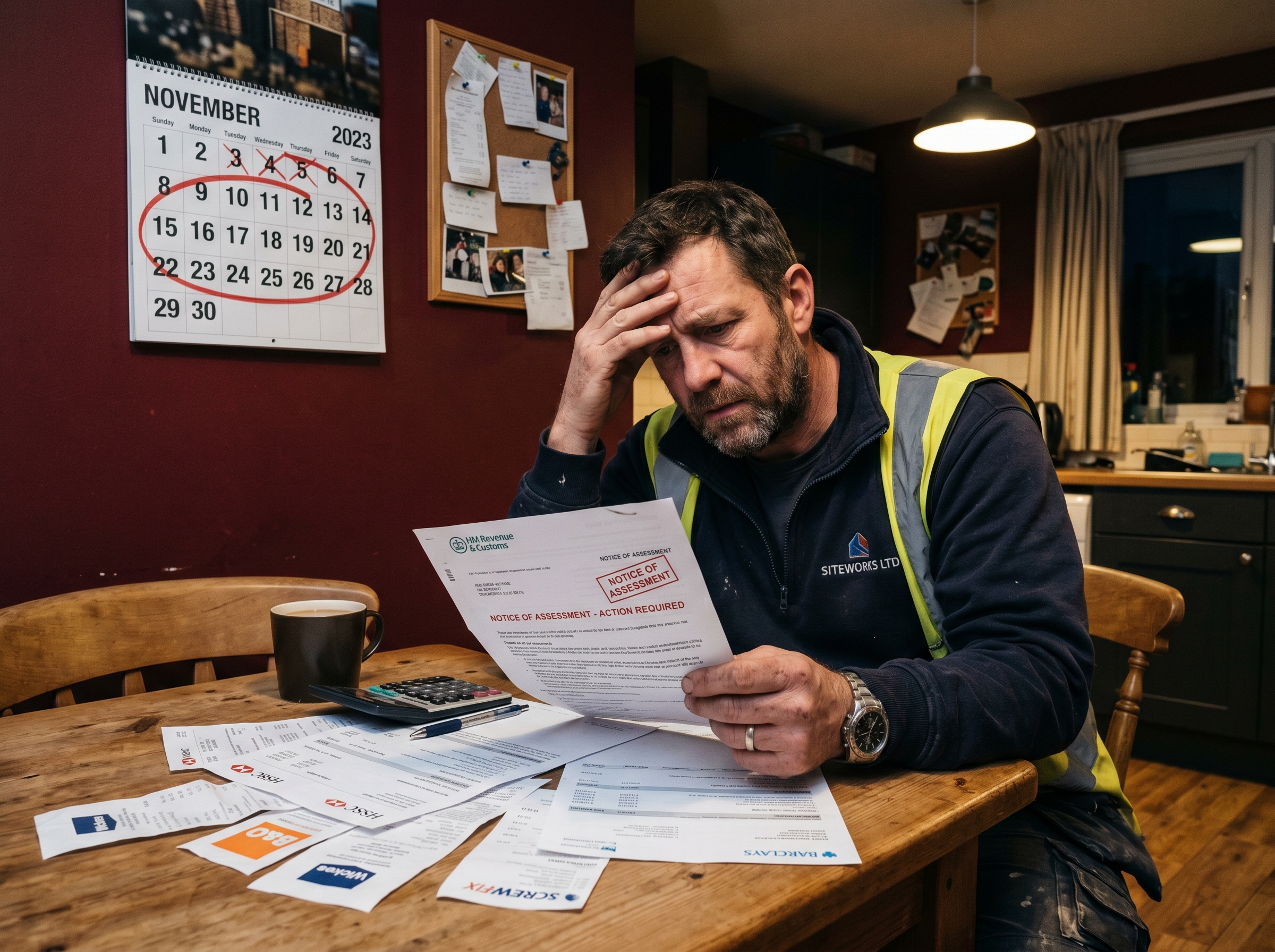
A Notice of Assessment is not an invitation to negotiate. It is HMRC's formal statement that they believe you owe more tax than you declared — and a legal clock starts from the moment it is dated. The most common response is to put the letter in a drawer and hope it goes away. It does not. The problem grows, the penalty increases, and the window to fight it closes.
What a Notice of Assessment Actually Means
HMRC issues a Notice of Assessment when their records suggest your Self Assessment return is incorrect. This is not a routine communication — it means someone at HMRC has specifically reviewed your return and reached a different conclusion from the one you submitted.
The notice sets out HMRC's version of your tax liability. It replaces your own Self Assessment figures for the relevant year unless you formally challenge it within the deadline. Once the appeal window closes without a response, HMRC's figures stand — and the debt, plus any penalties and interest that have accrued, becomes immediately collectible.
Silence is not neutrality. When you receive a Notice of Assessment and do nothing, you are legally accepting HMRC's calculation — whether it is right or wrong.
CIS Tax Insights, 2026Why HMRC Issues a Notice of Assessment
For CIS subcontractors specifically, these notices most commonly arise from four situations — all of which are avoidable with better record-keeping.
The 30-Day Rule: Your Most Important Deadline
You Have 30 Days From the Date on the Letter — Not the Date You Open It
The clock starts from the date printed on the Notice — not the day it arrives, and not the day you read it. If the letter sat on your doormat for a week before you opened it, you have already used seven of your thirty days. A phone call to HMRC does not count as an appeal. You must respond in writing, with evidence, within that window. Late appeals can sometimes be accepted in exceptional circumstances — but this is not guaranteed and should not be relied upon.
While an appeal is in progress, you can formally request that HMRC postpone collection of the disputed amount. This means you do not have to pay the additional tax while the appeal is being considered. The request must be made in writing alongside or shortly after your appeal. Without this request, HMRC can pursue collection even while the dispute is unresolved.
The Real Cost of Ignoring the Letter
| Original expense claims (tools + mileage) | £6,000 |
| Amount HMRC disallowed (insufficient evidence) | −£3,800 |
| Additional tax on disallowed expenses (20%) | £760 |
| If he ignored the Notice | |
| 30% penalty on unpaid tax | +£228 |
| Interest on overdue tax (HMRC rate) | +£190 |
| Debt collection costs (estimate) | +£420 |
| Total bill — ignored Notice | £2,400+ |
| If he appealed with evidence | |
| Mileage logs and tool receipts submitted — appeal successful | £0 owed |
Exactly What to Do When the Letter Arrives
What Your Appeal Letter Must Include
Should You Appeal or Accept?
- You have receipts, mileage logs, or bank records that support your original claim
- Your income figures are correct and CIS statements prove it
- HMRC has applied the wrong tax rate or misunderstood the nature of an expense
- The disputed amount is significant — even a partial success is worth the effort
- You have an accountant who can handle the correspondence
- You made a genuine error and HMRC's figures are correct
- The receipts no longer exist and the claim cannot be evidenced
- The disputed amount is small and the cost of fighting exceeds the saving
- Paying promptly stops interest accumulating and may reduce penalties
- You want to avoid escalation to a full enquiry
The Worst Thing You Can Do Is Nothing
A Notice of Assessment is not the end. Most are successfully challenged when the subcontractor responds promptly with proper evidence. HMRC issues these notices in volume — many are triggered by automated systems flagging statistical anomalies, not by a deliberate decision that you have done something wrong.
The subcontractors who end up with £2,400 bills from £760 queries are not the ones who had the weakest cases. They are the ones who did not open the letter in time. They are the ones who called HMRC on the phone instead of responding in writing. They are the ones who assumed it would sort itself out.
If a Notice is sitting somewhere in your paperwork right now — open it. Check the date. Calculate the deadline. Then call your accountant or start gathering your evidence. The window is closing from the moment the letter was printed.
QuoteDone Tools
Clean Records Are Your Best Defence.
The strongest appeal is built on clean invoices, organised CIS statements, and a clear expense record. Start getting yours right today.
This article is for informational purposes only and does not constitute professional tax or legal advice. If you have received a Notice of Assessment, consult a qualified accountant or tax adviser immediately. Deadlines and procedures are based on 2026 HMRC guidance.