HMRC Compliance · 2026/27
Many CIS subcontractors lose money two different ways: missing legitimate deductions for proper safety gear, and risking penalties for claiming everyday clothes that don't qualify. Here's where the line actually sits.
Here's a question worth asking before your next Self Assessment: do you actually know why HMRC will accept your hi-vis jacket but reject your work hoodie? Most subcontractors have a rough instinct about this, but the actual rule is more specific — and more workable — than most people realise. Get it right, and you claim everything you're entitled to without raising any flags.
The Rule Behind Every Workwear Decision: "Wholly and Exclusively"
HMRC applies one consistent test to every expense a sole trader claims: it must be incurred wholly and exclusively for the purposes of your trade. If an item gives you an ordinary personal benefit — keeping you warm, dry, or simply dressed, the same way regular clothing would for anyone — it fails that test, even if you only ever wear it on site.
This is why a plain hoodie doesn't qualify, even if it's covered in plaster dust and you'd never wear it anywhere else. The test isn't about how the item ends up looking — it's about what the item was for in the first place. A hoodie is fundamentally clothing, the same as it would be for someone with an office job. A pair of steel-toe safety boots isn't; nobody buys those for a day at the shops.
HMRC doesn't care that your work clothes get ruined on site. The test is about purpose: was the item built for trade safety or trade identity, or is it just clothing that happens to get dirty at work?
CIS Tax Insights · 2026What Actually Qualifies — And What Doesn't
Run anything you're about to claim through this two-column test before logging it as a business expense.
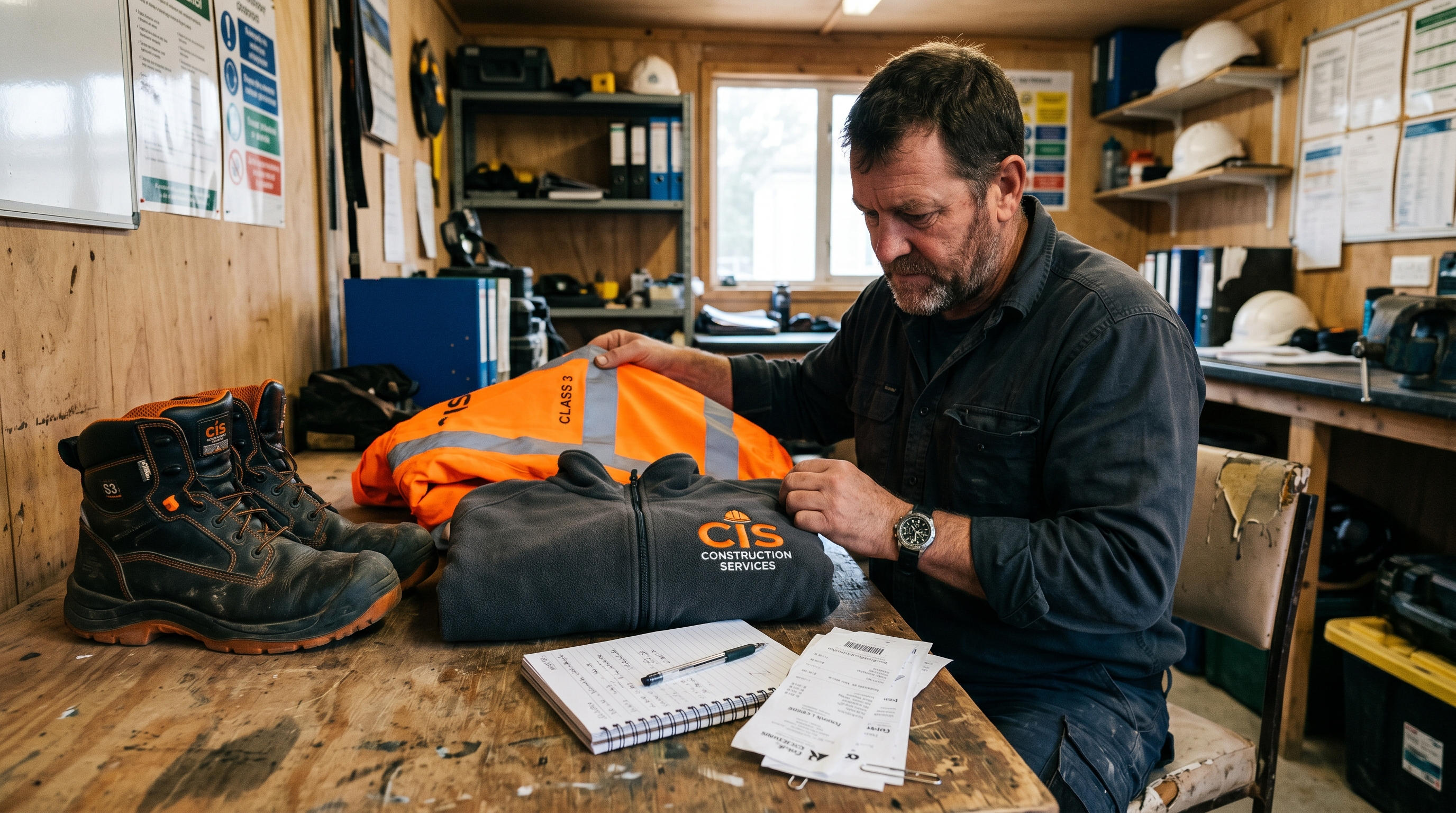
- PPE: Steel-toe boots, hard hats, hi-vis jackets, safety goggles, ear defenders, and respirators.
- Task-specific protective gear: Heavy-duty trousers with integrated knee-pad pockets, fire-retardant overalls.
- Permanently branded uniform: Tops and jackets with a business logo embroidered or printed directly onto the garment.
- Certified safety footwear: Boots meeting recognised safety standards (S1, S2, S3) with visible certification markings.
- Plain layering: Generic hoodies, fleeces, or jumpers worn for warmth with no permanent branding.
- Everyday wardrobe: Standard jeans, t-shirts, polo shirts, and ordinary socks.
- Uncertified footwear: Standard trainers or hiking boots without recognised site safety certification.
- Unbranded waterproofs: Rain jackets or trousers that aren't permanently branded and don't meet PPE standards.
What Getting It Right Is Actually Worth
Claiming correctly reduces your taxable profit, which means you pay tax only on what you actually earn after legitimate costs. Here's what that looks like for a typical subcontractor over a year.
| Item | Value |
|---|---|
| Taxable profit reduced by | £500 |
| Tax saved (20% basic rate) | £100 |
| Total saving from properly claiming this gear | £100 |
That £100 isn't dramatic on its own — but it's £100 you're entitled to and shouldn't leave unclaimed simply because the receipt got lost or the item wasn't logged. Multiply it across boots, hi-vis, branded layers, and PPE replaced every year, and it adds up to a meaningful amount over time.
If HMRC reviews your return and finds you've claimed ordinary clothing — like "work jeans" with no safety rating or branding — they'll remove the expense from your return, which means you owe the extra tax plus interest. If they also decide you didn't take reasonable care when making the claim, they can add a penalty of 15% to 30% of the tax that was underpaid.
Your Pre-Filing Workwear Checklist
-
Keep Itemised Receipts, Not Generic Ones Avoid accepting a generic receipt that just says "Clothing" or "Goods." Where possible, get one that names the specific item — for example, "S3-rated safety boots" — so you can show its trade purpose clearly if HMRC ever asks.
-
Check for Recognised Safety Certifications Before claiming protective footwear or hi-vis gear, confirm it carries the relevant safety markings (such as EN ISO 20471 for hi-vis or EN ISO 20345 for footwear). Standard outdoor or hiking gear, even if rugged, doesn't carry these certifications and won't qualify.
-
Get Your Logo Permanently Added to Layering Gear If you buy hoodies, polos, or jackets for site wear, have your business logo embroidered or printed directly onto the garment. Permanent branding is what shifts an item from "personal clothing" to "uniform" in HMRC's eyes — a removable badge or printed t-shirt from a one-off order generally won't be enough on its own.
-
Pay for Workwear Through Your Business Account Buy PPE and branded gear using your business debit card rather than mixing it into personal spending. Keeping business and personal purchases separate makes your records far easier to check — for you, your accountant, or HMRC if your return is ever queried.
Frequently Asked Questions
Can I claim a hoodie if it's only ever worn on site and never washed for anything else?
Generally, no — not unless it has your business logo permanently embroidered or printed onto it. HMRC's test isn't really about how you personally use the item; it's about whether the item itself is inherently work-specific (like safety boots) or inherently ordinary clothing that anyone might wear (like a plain hoodie). Branding is what moves a plain garment into "uniform" territory.
Do my safety boots need an official certification mark to be claimable?
It significantly strengthens your claim if they do. Boots with a clear safety rating (S1, S2, S3) are unambiguously PPE. Boots without certification — even sturdy, work-appropriate ones — sit in a greyer area and are more likely to be challenged if HMRC reviews your expenses. Where possible, choose certified footwear and keep the receipt showing the rating.
What if my contractor or site requires a specific uniform — does that automatically make it claimable?
Not automatically, but it helps your case. If a site has a strict dress code requiring branded or specific uniform items, this supports the argument that the clothing is for trade purposes rather than personal use. It's still worth aiming for permanently branded items where you can, since this removes any ambiguity.
Can I claim laundering or repair costs for my workwear?
Costs for cleaning or repairing genuinely qualifying workwear (certified PPE or permanently branded uniform) can generally be claimed alongside the original purchase, since they're part of maintaining an asset used wholly and exclusively for your trade. Keep receipts for laundering services or repair work the same way you would for the original purchase.
Claim With Confidence, Not Guesswork
Getting your workwear claims right isn't about pushing the boundaries of what you can get away with — it's about precision. When your gear is genuinely certified PPE or permanently branded uniform, you're entitled to claim every penny of it without any real risk. The goal is simply matching what you claim to what HMRC's rule actually requires.
Go through your receipts this week. Separate the plain comfort clothing from the certified safety gear and branded uniform. Keep your documentation clear and consistent, and your claims will hold up without a second thought if anyone ever asks.
QuoteDone Tools
Keep Your Expense Records Clean and Confident.
Check what HMRC owes you and keep your invoicing clear and compliant — so every legitimate expense is backed by solid records.
This article is for informational purposes only and does not constitute formal accounting, legal, or professional tax advice. Workwear allowance compliance depends on the specific branding and certified safety specifications of each item. Always verify your expense categorisation with a qualified accountant before final Self Assessment submission. Aligned to 2026/27 HMRC guidelines.